
Best Video Card for Laptop: Upgrade Your Performance Today!
When it comes to enhancing your laptop’s performance, especially for gaming, graphic design, and other resource-intensive applications, choosing the right video card for laptop is crucial. A video card, or graphics card, is responsible for rendering images, animations, and video. In this article, we will explore the importance of upgrading your video card, the types available, the best options for various budgets, and how to install and troubleshoot your new video card effectively.
Content
Understanding Video Cards for Laptops
What is a Video Card for Laptop?
A video card for laptop serves as the component that enables your laptop to process and render visual data. Unlike desktop computers, where video cards can be easily replaced, laptops often come with either integrated graphics or dedicated video cards.
Types of Video Cards for Laptops
Laptops generally use two types of video cards:
- Internal Graphics Cards (Integrated): These are built into the laptop’s CPU and share system memory. They are suitable for everyday tasks but can struggle with demanding applications.
- Dedicated Video Cards: These are separate components designed specifically for graphics processing. They have their own memory (VRAM) and provide significantly better performance for gaming and graphic-intensive tasks.
| Type of Video Card | Pros | Cons |
|---|---|---|
| Integrated Graphics | Lower cost, power-efficient | Limited performance for gaming |
| Dedicated Graphics | High performance, better visuals | Higher cost, more power consumption |
Why Upgrading Your Laptop’s Video Card is Essential
Performance Benefits of a Better Video Card for Laptop
Upgrading your laptop’s video card can dramatically enhance its performance. A superior video card allows for smoother gameplay, higher frame rates, and the ability to run demanding applications like video editing software and 3D rendering tools with ease.
Signs That You Need to Upgrade Your Video Card
If you notice any of the following signs, it may be time to consider an upgrade:
- Your laptop struggles to run recent games or software.
- You experience lag or stuttering during graphics-intensive tasks.
- The laptop heats up excessively and drains the battery quickly.
How to Choose the Best Video Card for Laptop
Key Features to Consider
When selecting a video card for your laptop, consider these crucial features:
- Performance Benchmarks: Check benchmarks to compare the performance of different video cards.
- VRAM: More VRAM allows for better performance in high-resolution gaming and professional applications.
- Cooling Solutions: Good thermal management is essential to maintain performance and avoid overheating.
- Compatibility: Ensure the card is compatible with your laptop’s model and specifications.
Popular Video Card Brands for Laptops
Some of the leading brands in the laptop video card market include:
- NVIDIA: Known for their GeForce line, which offers great performance for gaming and design.
- AMD: Offers Radeon cards that are competitive in both performance and price.
- Intel: Provides integrated graphics solutions that are suitable for everyday use.
Installation and Upgrade Process for Video Card for Laptop
Can You Upgrade the Video Card for Laptop?
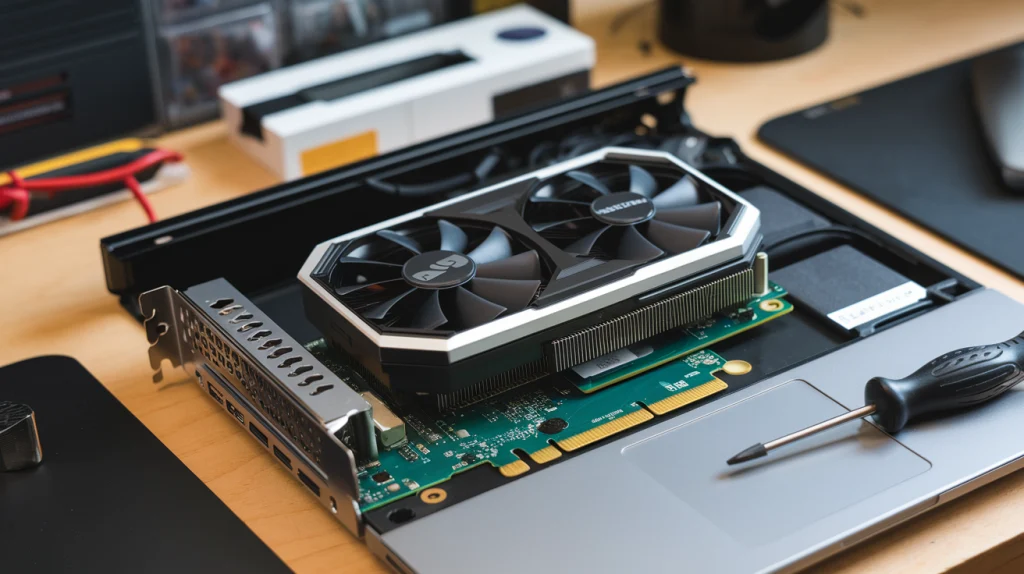
The ability to upgrade your laptop’s video card depends on its design. Most modern laptops, particularly gaming and workstation models, allow for dedicated graphics card upgrades. However, many ultrabooks and standard laptops do not support this feature due to integrated graphics.
Step-by-Step Guide to Upgrading Your Video Card
If your laptop allows an upgrade, here’s how to proceed:
- Check Compatibility: Ensure the new video card is compatible with your laptop model.
- Gather Tools: You’ll need a screwdriver, anti-static wrist strap, and thermal paste (if required).
- Power Down: Turn off your laptop and unplug it from the power source.
- Remove the Back Cover: Unscrew and carefully detach the back panel.
- Locate the Video Card: Identify the existing video card and unscrew it from its slot.
- Install the New Video Card: Place the new card in the slot and secure it with screws.
- Reconnect: Reattach the back cover and power on the laptop.
- Install Drivers: Download and install the latest drivers for the new video card.
Troubleshooting Common Issues After Upgrading Your Video Card for Laptop
Common Problems and Solutions
After upgrading your video card, you may encounter issues. Here are some common problems and their solutions:
- Driver Installation Issues: Ensure that you are using the latest drivers from the manufacturer’s website.
- Performance Problems: If performance is not as expected, check the settings in your game or software, and consider adjusting graphics settings.
- Overheating and Power Supply Concerns: Ensure that your laptop has adequate cooling. You may also need to check if your power supply can support the new video card’s requirements.
Conclusion
Investing in the right video card for laptop can significantly enhance your computing experience, whether for gaming, creative work, or general use. By understanding your options and considering the factors mentioned, you can choose the best video card that fits your needs and budget. Don’t hesitate to evaluate your current setup and explore the possibilities of an upgrade today!